For more complex websites, Umbraco CMS developers have had to use the content tree in creative ways to implement reusable and non-routable content features. So what does that mean in practice?
Reusable content includes website content that should appear on more than one page, like a call to action for a newsletter signup, an alert or advertisement, a header or other visual element, etc. It can also include content used outside of web pages, like product specs used in a similar series of products.
Non-routable content is any content that is not a web page. This can include things like custom website settings, libraries of content like product data, complex picker options, et al. Many of these kinds of content are shown on web pages in one way or another, but are not themselves web pages in the technical sense.
Umbraco CMS 19 is a LTS (long-term support) release with the usual bug fixes and performance improvements, set to be released in December of 2026. One notable new addition addresses the issues with reusable and non-routable content I just described. It's a new content editor section named "Library".
The new Library area of the back office first appeared in version 18 supporting reusable content elements using a content picker. This allowed content editors to choose 1 or more reusable items as a property of another content item. For example, choosing a color scheme for a page header.
Version 19 adds the use of Library items in the block editor, which is used for stacking content to build web pages, among other things. In fact, it also adds the ability to both detach Library content so changes don't affect all consumers of the item, and save a block to the Library so others can access it. This can even be used as a sort of templating system to bootstrap page content with a starter block.
One of the patterns we've used for a long time is creating a Settings node under the home page node, and under that creating a tree structure of configuration items like short codes, forms, shared blocks, organization profile, menus, 301/302 redirect mappings, domain redirects, and more. Much of this structure can be moved to the Library, and some of it (like shared blocks) can go away entirely, which is a big win!
 Settings and Global Units are now in the Library, leaving more content tree space for web pages.
Another benefit of moving these items outside the content tree is that all tree items are inherently routable, meaning, even without a template appliedm, Umbraco will still process requests to these items and try to serve them as pages, which wastes server resources and allows curious or malicious people to explore the structure of your content tree by looking at the request responses. You can code around this, as we typically do, to serve 404 (not found) pages. But it's another chore to remember which the Library solves by not routing its content.
There's usually more to the story so if you have questions or comments about this post let us know!
Do you need a new software development partner for an upcoming project? We would love to work with you! From websites and mobile apps to cloud services and custom software, we can help!
The latest versions of Umbraco CMS offer a set of free AI enhancements as Nuget packages, one of which is a semantic search feature. The platform already comes bundled with Lucene/Examine for a powerful keyword search using word similarity matching, so the semantic search add-on fills a contextual search gap.
When implemented, this kind of search analyzes your content using an AI embeddings model so that your searches return results based on intent, not keyword matching or word similarity. The only requirement is that you have a vector database, which is used to store and query the embeddings. This project allows you to use the Umbraco semantic search feature with Qdrant; a free and open source vector database. It's also one of the fastest.
You can see this in action right on this blog! Our blog search can be used to ask questions and will return relevant results even if the words you use aren't in the content. It does this by analyzing the content and question using AI language analysis, much like a chatbot would, to return results based on what the post text means, not simply the words it contains.
Try this question:
This should return AI data poisoning and Benford's Law as a top results, unless we added something more relevant since they were posted. Most of the question is noise words. And the remaining words are either not in the posts at all, or exist in many other posts as well. And yet it understood what you meant.
If you'd like to use the provider in your own Umbraco CMS 17+ project, add it by searching nuget for "Fynydd.Umbraco.Search.Qdrant", or find it using the button below.
If you want to check out the source code, fork and customize it, or make a pull request with new features or bug fixes, you can also find the project on Github.
There's usually more to the story so if you have questions or comments about this post let us know!
Do you need a new software development partner for an upcoming project? We would love to work with you! From websites and mobile apps to cloud services and custom software, we can help!
Umbraco CMS is a .NET content management platform used by individuals and large enterprise for everything from personal blogs to global SaaS products. It's powerful, extensible, easy to use, and open source. And it's evolving to embrace AI in ways that genuinely improve developer and content author experiences.
The new features and capabilities are foundational, based on real world needs, taking advantage of the technical opportunities large language models (LLMs) provide, targeting discreet areas in the platform. There are official Umbraco blog posts that talk about philosophy, areas of focus, primers on the individual AI technologies, and more.
The goal of this post is to provide a high-level summary of the changes and who they affect.
Umbraco is constantly evolving, most notably releasing a new major version each year just after Microsoft likewise releases a new major version of .NET. This is a blessing and a curse. On one hand, Umbraco developers get to take advantage of new .NET performance, security, and other features. But supporting a sprawling ecosystem of Umbraco versions is a challenge, especially when the breaking changes and development patterns change so frequently and vary so much between major releases.
To address this, the Umbraco CMS team has added integrations to your AI agent platform of choice. These integrations provide additional technical information about Umbraco CMS, including best practices, as well as provide controlled access to your schema and data through the official Umbraco CMS APIs.
The MCP standard allows the hosting of very specific tools that can be used by AI agents to get things done in a more simple, direct way. Umbraco supports this by providing a separate MCP host application that developers can run to give their agents deep platform and data access through the Umbraco Management API.
There are a myriad of actions that your agent can perform using these MCP extensions, including categories from site structure and user permissions, to monitoring, analytics, localization, and advanced workflows.
They allow the agent to do things with the API that would normally be done using the back office. These are actions you perform during development, like creating document types and setting permissions.
Originally a Claude Code-only feature, but now available in other AI agent platforms like OpenAI Codex, agent skills are a way to tell the AI coding environment about a given technology, which speeds development and ensures that the correct development patterns (best practices) are followed.
Umbraco is providing agent skills that will allow you to better use your AI agent of choice to build on the latest versions of Umbraco (version 17+). It's important to note that as magical as they can appear to be, there are caveats:
Not a replacement for documentation. Skills point to the documentation and teach the AI how to apply it. You should still read the Umbraco documentation.
Not scaffolding tools. They don't generate boilerplate from templates. They teach the AI to write code that fits your specific requirements.
Not perfect. Skills improve results but cannot guarantee correctness. Always review generated code.
They allow you to work with your agent to write code for things like a back office property editor for a YouTube video picker, or an notification that adds metadata to uploaded media, etc.
You can also leverage AI tools in the Umbraco platform itself, through the platform agnostic AI integration in the back office. You simply add the official Umbraco AI package, and configure the appropriate AI provider. Supported providers include:
Anthropic
AWS Bedrock
Microsoft AI Foundry
OpenAI
You finish by adding a new profile (chat or embedding), which controls the type, usage, and behavior of the AI model instance. For example, you can set the model temperature to help with determinism. Note: the profile is the vehicle through which you use the AI instance in your own code.
You can use your configured AI tool in the back office through a chat interface, to help manage content and structure, clean up data, add media metadata, and more. You can also use the configured AI instance in your application code to provide AI-driven features with pipelines and guardrails, all using the Umbraco APIs (which use the Microsoft Extensions AI package under the hood).
The official Umbraco CMS documentation on AI features can be found at the links below. Though not exhaustive, these are key resources you should check out.
Umbraco in AI — Enhancements to make building with AI smarter.
Backoffice extension agent skills — install and use the Umbraco backoffice agent skills repository with Claude Code (and other AI coding agents)
AI in Umbraco — Add AI tools and capabilities to Umbraco CMS
There's usually more to the story so if you have questions or comments about this post let us know!
Do you need a new software development partner for an upcoming project? We would love to work with you! From websites and mobile apps to cloud services and custom software, we can help!

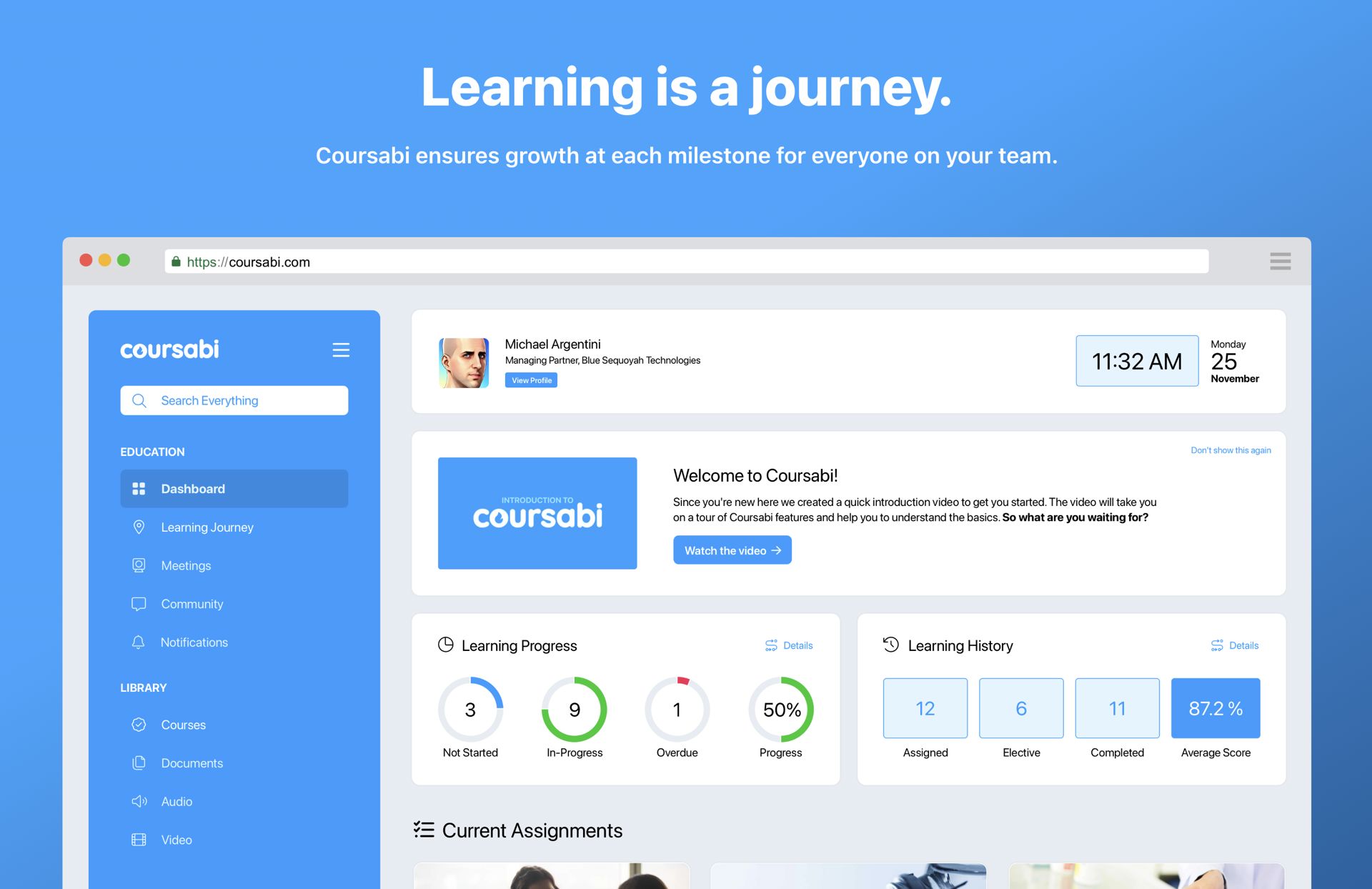
In highly regulated industries such as pharmaceuticals, medical devices, and biotech; training records and learning systems are more than just business tools — they are part of an organization’s compliance infrastructure. For companies subject to FDA regulations, ensuring that training platforms meet 21 CFR Part 11 requirements isn’t optional — it’s mission-critical.
Recently, our team, working with Cloudrise Inc and IvyRock LLC, successfully completed the process of validating our SaaS Learning Management System, Coursabi, to be compliant with 21 CFR Part 11. It was a journey that combined technical diligence, regulatory understanding, and close collaboration with quality experts. Here’s how we did it — and what we learned along the way.
21 CFR Part 11 is the FDA regulation that sets the standard for electronic records and electronic signatures. It ensures that electronic systems used in regulated environments are trustworthy, reliable, and equivalent to paper records.
For a learning management system, this means:
Secure access controls
Audit trails for all training and record changes
Electronic signature validation
Data integrity and backup safeguards
System validation to prove it works as intended
Without compliance, training records in such industries could be deemed invalid — a risk no regulated company can afford.
Our first step was to thoroughly understand what 21 CFR Part 11 compliance meant for our LMS. While our platform already had robust security and reporting features, the regulation required specific documented controls and formal validation evidence.
We worked closely with compliance consultants and industry experts to translate the regulation’s language into actionable technical and procedural requirements.
Working with Cloudrise, we followed the standard validation methodology:
Master Validation Plan (MVP):
User Requirements Specification (URS):
System Configuration Specification (SCS)
Installation Qualification (IQ): Verified that the LMS was installed correctly in our SaaS environment, with all necessary dependencies and security configurations in place.
Operational Qualification (OQ): Tested each functional requirement — from login authentication to audit trail accuracy — against the regulation’s criteria.
Performance Qualification (PQ): Confirmed that the LMS performed consistently in real-world use cases over time.
Every test step was scripted, executed, and documented with results, screenshots, and approvals.
21 CFR Part 11 compliance isn’t just about software — it’s about how the system is used, updated and managed. We worked primarily with IvyRock LLC, to update several of our Standard Operating Procedures (SOPs) for:
HR-Employee Training Policy and Log
HR-Electronic Signatures Policy (submission letter FDA indicating our acceptance)
Q-Policy Format and Preparation Maintenance and Control of Polices
Q-Good Documentation Practices Policy
Q-Document Control Policy
Q-Change Control Policy
Q-Deviations Policy
Q-CAPAs Policy
SW-Version Control Policy
SW-Software Release Policy
SW-Computer System Validation Policy
SW-Coursabi Mission Control Administration Policy
SW-Coursabi Use and Operation Policy
S-Business Continuity Plan/Policy (specific to Coursabi)
These SOPs ensure that compliance is maintained long after the validation project is complete.
Our final deliverable was a Validation Summary Report, which tied together:
The validation plan
Test results
Deviations and resolutions
Final compliance statement
With this report approved, we could officially state that our LMS is validated and 21 CFR Part 11 compliant.
Validation is a team effort — involving developers, quality experts, and end-users.
Documentation is as important as the software itself — if it’s not documented, it didn’t happen.
Compliance is ongoing — system updates, infrastructure changes, and new features require periodic re-validation.
For organizations in regulated industries, using our LMS means they can:
Confidently train employees in a compliant environment
Pass FDA audits with complete, trustworthy training records
Save time and resources by leveraging a validated SaaS solution instead of building one from scratch
Working through the 21 CFR Part 11 validation process for our SaaS LMS was a challenging but rewarding experience. It pushed us to elevate our technical controls, strengthen our documentation, and embed compliance into the very DNA of our platform.
Now, our customers in regulated industries can focus on what matters most — delivering high-quality products and services — knowing their training system meets the highest compliance standards.
There's usually more to the story so if you have questions or comments about this post let us know!
Do you need a new software development partner for an upcoming project? We would love to work with you! From websites and mobile apps to cloud services and custom software, we can help!
Cloud storage services, like Google Cloud Firestore, are a common solution for scalable website and app data storage. But sometimes there are compliance mandates that require data services to be segregated, self-hosted, or otherwise provide enhanced security. There are also performance benefits when your data service is on the same subnet as your website or API. This is why we built the Datoids data service.
The Datoids data service is a standalone platform that can be hosted on Linux, macOS, or Windows. It uses Microsoft SQL Server as the database engine, and provides a gRPC API that is super fast because commands and data transfers are binary streams sent over an HTTP/2 connection. In addition to read/update/store functionality, it also provides a freetext search. We've been using it in production environments with great success.
Although the API can be used to completely control the platform, Datoids also includes a separate web management interface. It provides a way to configure collections, API keys, and even browse and search data, and add/edit/delete items. We've embedded Microsoft's simple but powerful Monaco editor (the same one used for VS Code) for editing data.
The architecture is clean. Projects are organizational structures like folders in a file system. Collections act like spreadsheets (or tables in SQL parlance) filled with your data. There are also service accounts that are used to access the data from your website or app.
To make using it as easy as possible, we built a .NET client package that can be included in any .NET project, so that using Datoids requires no knowledge of gRPC or HTTP/2, since reading and storing data is done using models or anonymous types.
Getting a value from Datoids is simple:
Likewise, storing data is just as easy.
You can also modify data without replacing the entire object.
There are plenty of other ways to read and write date as well, combining primary key and native query options. You can even perform bulk transactions.
If you have a website or app platform that needs a robust and performant data service, let us know! We can provide a demo and answer any questions.
There's usually more to the story so if you have questions or comments about this post let us know!
Do you need a new software development partner for an upcoming project? We would love to work with you! From websites and mobile apps to cloud services and custom software, we can help!

In early 2024 Umbraco Commerce (UC) was a relatively new product. It provided features to build a storefront in Umbraco, but we soon discovered that using it was a rough ride. It had glaring bugs, an incomplete feature set, almost no documentation, and was Europe-focused. It was also expensive, especially considering that you have to build your own product browser and cart. Around that time Pentec Health asked us to add a store to the ZOIA Healthcare Umbraco website. Given the state of UC we decided to build our own solution tailored specifically for ZOIA and Umbraco.
The shopping experience is familiar and clean, offering a product browser with categories, pricing, images, and descriptions. Out of stock items are clearly indicated. Paging is used to allow for bookmarking specific filters. And search is centralized and global to the entire store. Visitors are instantly at home.
Viewing a product is also a familiar experience. Staples like product image, clear pricing, and description are front and center. One click add to cart and quantity choices are featured. And when a product is out of stock, authenticated users have the option to be notified when the product is back in stock.
Managing your cart is simple, and when you're ready to check out, the process is straightforward and focused on speed, using simple steps and minimal options. This is one of the reasons we chose to integrate with Stripe for payments. Their flow perfectly fits with our view of what a checkout should be.
And once the order is placed, customers can view the status and order history right from their profile.
The intuitive user experience also extends to the back office. Store configuration options are in one place, including Stripe integration settings, custom shipping methods, page assignments, and contact information. And shopping stages are used to segment orders making them easy to find and process. The stages of an order include: Shopping cart, Payment pending, Paid, Shipped, and Cancelled. Customers are notified of changes in order state so they're always up-to-date.
There is also a powerful coupon code system which allows managers to create a myriad of offers for customers, from simple discounts, to buy one get one (BOGO) specials, free item based on category/price/product, and more.
We also created a dedicated import/export and stock management feature. It allows store managers to export inventory and order data, as well as import current stock levels (replacing stock counts or adding more items) to make updating product availability across the entire store a quick and painless process.
ZOIA is also a premiere provider of renal support food products for local governments and organizations, so their store also has rich B2B support, allowing ZOIA to service various types of organization accounts, large and recurring orders, proxy ordering for organization members, invoiced and deferred payments, and more.
Visit the ZOIA Healthcare marketplace to check it out yourself. If you're interested in a storefront for your products (even if you're not using Umbraco), let us know. We can help!
There's usually more to the story so if you have questions or comments about this post let us know!
Do you need a new software development partner for an upcoming project? We would love to work with you! From websites and mobile apps to cloud services and custom software, we can help!
 Alkermes is leveraging their long-standing neuroscience expertise to develop medicines that make a difference.
During the COVID pandemic, Fynydd partnered with Blue Sequoyah Technologies (https://bluesequoyah.com) to build Coursabi: a cutting edge learning platform (https://coursabi.com). It's an all-in-one learning solution with features like native and SCORM course support, video conferencing, audio and video libraries, forms, reports, events, and more, all presented as a concise learning journey.
We found particular success in the pharmaceutical and healthcare space, and are proud to see these clients renewing each year as they find success in keeping their teams trained, compliant, and most of all, happy.
Alkermes (https://alkermes.com) has been applying deep neuroscience expertise to develop medicines designed to help people living with complex and difficult-to-treat psychiatric and neurological disorders. They're one of our first subscribers and we're proud to say that they have renewed their Coursabi subscription for 2025!
There's usually more to the story so if you have questions or comments about this post let us know!
Do you need a new software development partner for an upcoming project? We would love to work with you! From websites and mobile apps to cloud services and custom software, we can help!
 In the past three decades, tremendous progress has been made in the fight against cancer, but there is still so much more work to be done. At Deciphera, we remain steadfast in our mission to improve the lives of people living with cancer - and that passion for making a difference extends to the patient groups and communities in which we live and work.
During the COVID pandemic, Fynydd partnered with Blue Sequoyah Technologies (https://bluesequoyah.com) to build Coursabi: a cutting edge learning platform (https://coursabi.com). It's an all-in-one learning solution with features like native and SCORM course support, video conferencing, audio and video libraries, forms, reports, events, and more, all presented as a concise learning journey.
We found particular success in the pharmaceutical and healthcare space, and are proud to see these clients renewing each year as they find success in keeping their teams trained, compliant, and most of all, happy.
One of our early subscribers, Deciphera (https://deciphera.com), has been at the cutting edge of cancer research for decades. They do great work, and we're proud to say that they have renewed their Coursabi subscription for 2025!
There's usually more to the story so if you have questions or comments about this post let us know!
Do you need a new software development partner for an upcoming project? We would love to work with you! From websites and mobile apps to cloud services and custom software, we can help!

There is a world full of "build your own website" services that allow just about anyone to stand up a new website in a few hours. Even organizations can leverage the simplicity offered by these services to set up an online store, community, and more. Here are a few examples of why people typically choose these services.
Sounds great! But as with everything in life, there are tradeoffs.
Regardless, these services can be a great way for individuals and small organizations to bootstrap their web presence, and in many cases, you can happily continue to use the service for years.
But there are also long-term lock-in issues that can be more serious, potentially impeding your growth, for example:
If the tradeoffs are too much to swallow, fear not! You can also go with a custom web app tailored specifically to your needs and budget. It can match your vision without compromises and scaling can be managed more easily as your business or traffic grow.
So how do you get started? With a builder service you first have to find one with the price and features you need, and then create an account and dig into their control panel to start configuring your website. Whereas for a custom website the first step is to find a web development partner you can rely on for advice and technical expertise, like Fynydd. Your partner can help gather your ideas, come up with a plan, and build your web app, all within your budget and timeline. They're usually experts in both new web app projects and migrations from other platforms and services. Most importantly, they fill the knowledge gap left by the "build your own website" service.
A web development partner will choose technologies that have a proven security track record. One way we do this is by consulting the CVE database; a publicly funded global resource for tracking common vulnerabilities and exposures. For example, a CVE search quickly reveals that WordPress has historically been a security nightmare.
Your development partner will help you with a design that matches your vision, a hosting service that meets your needs and budget, a security review, a backup plan and disaster recovery strategy, and more. When the time comes to grow your platform, they can help with that too. And throughout the journey you maintain full control over your brand, your website, your data, and your customers.
There's usually more to the story so if you have questions or comments about this post let us know!
Do you need a new software development partner for an upcoming project? We would love to work with you! From websites and mobile apps to cloud services and custom software, we can help!

ZOIA Healthcare is a direct-to-patient provider of specialized nutritional products dedicated to empowering and improving the lives of individuals with inherited metabolic disorders and other rare diseases. They focus on navigating the complexities of healthcare, ensuring patients who require targeted nutrition that cannot be met through a regular diet alone gain access to necessary medical and low protein foods.
Accredited by the Healthcare Quality Association on Accreditation (HQAA), they adhere to stringent standards, helping their patients experience transformative outcomes. Their portfolio is curated to foster advancements in disease management, harnessing the power of nutrition.
ZOIA Pharma partnered with Fynydd to build a new web sales and marketing platform providing patients and organizations with a streamlined shopping experience. Individuals can browse, search, and purchase nutrition products, and even get notified when products are back in stock. And organizations also have the ability to offer a formulary catering specifically to their patients.
Some of the key features of the platform include:

CSS3

HTML5

JavaScript

Sass/SCSS

Amazon Web Services

C#

Github

Microsoft .NET

Microsoft Windows

SQL Server

Stripe

Umbraco CMS
There's usually more to the story so if you have questions or comments about this post let us know!
Do you need a new software development partner for an upcoming project? We would love to work with you! From websites and mobile apps to cloud services and custom software, we can help!